
 Skip to main content


Meet your reliable C/C++ development partner
Apriorit provides you with engineers who can work safely with complex architectures, legacy systems, platform-specific constraints, low-level components, and more.
Building complex C++ products is our speciality. We have been solving non-trivial low-level programming tasks for 20+ years, helping our clients release competitive, secure, and reliable products.

With Apriorit, you get:
- Expert C/C++ engineers who are ready to join your team quickly
- Predictable and reliable delivery for technically demanding projects
- Security-focused development and delivery workflows
- Reliable integration of C/C++ code with Rust and other languages

C/C++ development services we offer

Looking for niche C/C++ development skills?
Extend your team with Apriorit’s specialists to solve your development challenges.
Types of C/C++ solutions we build
System, low-level, and kernel-level software
- Device drivers
- File system management solutions
- OS monitoring and management applications
- Remote access protocol components
- Virtual application delivery platforms

Embedded and IoT solutions
- Device firmware
- IoT software
- Software for connected embedded systems
Cybersecurity and data protection systems
- Data protection and management solutions (DLP, SIEM, XDR, SOAR systems, and more)
- Software for traffic inspection and monitoring
- Security-focused system components

Network and infrastructure solutions
- Cloud server solutions
- Network management software
- Database connectivity solutions
- Virtualization and cloud computing components
- Software for infrastructure visibility and control

Tools and technologieswe work with
COM (Component Object Model)
UMDF (User Mode Driver Framework)
Linux API
KMDF (Kernel Mode Driver Framework)
WDM (Windows Driver Model)
SELinux
File System Minifilter
Kernel Network Miniredirector
WinUSB (Windows USB)
WinAPI (Windows Application Programming Interface)
API Hooking
Boost ASIO
POSIX (Portable Operating System Interface)
CUDA (Compute Unified Device Architecture)
PE/ELF (Portable Executable/Executable and Linkable Format)
Kernel Network Miniredirector
WiX (Windows Installer XML)
DriverKit (macOS)
ATL (Active Template Library)
Boost (C++ Libraries)
WFP (Windows Filtering Platform)
Qt (C++ GUI Toolkit)
SystemExtensions (macOS)
STL (Standard Template Library)
Linux kernel API
EndpointSecurity (macOS)
OpenSSL (open-source cryptographic library)
eBPF
ACE (Adaptive Communication Environment)
NetworkExtensions (macOS)
Unit testing
CI (Continuous Integration)
Profiling
GoogleTest (C++ testing framework)
GoogleMock (C++ mocking framework)
Catch2 (C++ testing framework)

Visual Studio

Copilot
WinDbg
CMake
WCF
Nuget
IDA (Interactive Disassembler)

Sysinternals Suite
Wireshark
Services to furtherpower your product
Industries we serve
Don’t see your industry in the list?
Our expertise reaches far beyond — let’s discuss how we can help your project.
C/C++ projectswe have recently delivered
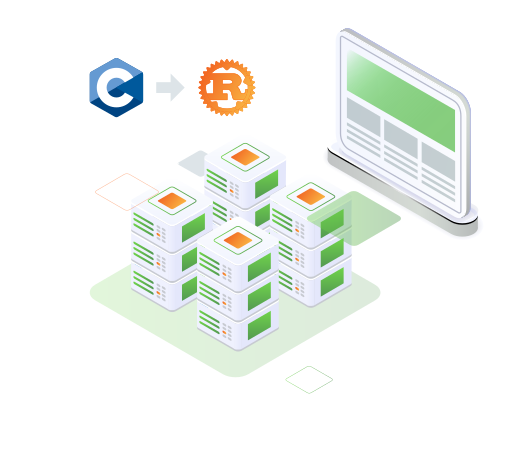
Porting a Remote Connectivity Protocol from C to Rust for Web Use
Our team helped Devolutions to port their IronVNC protocol from C to Rust, enable support for additional browsers, and add features to improve security, performance, and maintainability.
Thanks to Apriorit’s optimization strategy, the new protocol is faster than the original. This upgrade allows Devolutions to deliver safer and more flexible cross-platform remote audio management.
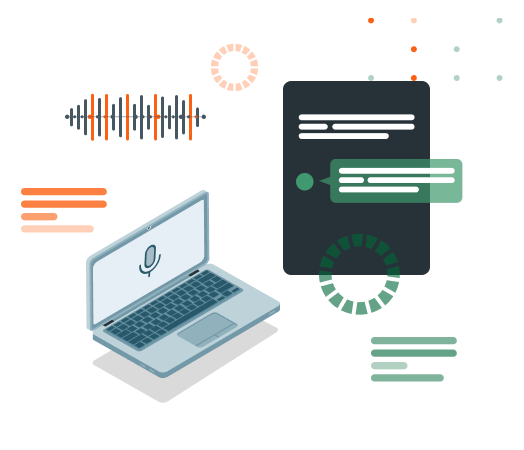
Improving a Windows Audio Driver to Obtain a WHQL Release Signature
A British audio technology company asked Apriorit to improve their Windows driver and help them prepare for WHQL testing.
The Apriorit team tested the initial driver, fixed discovered flaws, and made improvements that ensured successful WHQL certification.

From Vulnerable to Bulletproof: Securing Intellectual Property Through Reverse Engineering
Our client who delivers automation software for heavy industrial machinery requested an audit of their IP protection. Apriorit’s reverse engineering experts analyzed their software and offered ways to improve its security.
With manual file analysis and reverse engineering, the Apriorit team confirmed the possibility of recovering both files and software logic from the provided DLLs. We also offered more reliable obfuscation algorithms to make such reversing far more difficult.

Custom Cybersecurity Solution Development: From MVP to Support and Maintenance
In a multi-year partnership, Apriorit helped a cybersecurity company to design and deliver an MVP for an activity monitoring platform, then turn it into a competitive product.
Our client was able to test their business idea, turn the MVP into a comprehensive platform, and tailor it to regional and industry-specific markets.

Why choose Aprioritfor C/C++ development?
01
Cybersecurity-focused engineering
Ensure your code security at any stage of development with our processes. We align with ISO 27001, NIST Special Publications, and secure SDLC practices.
02
End-to-end R&D from one vendor
Work with 400+ development specialists — from business analysts to QA experts — under one roof and within one communication flow.
03
Predictable delivery built on clear metrics
Be on top of your project at any moment with our transparent delivery metrics, agreed success criteria, and regular progress updates.
04
Problem-solving mindset
Work with a tech partner who looks for solutions, not excuses. Bring us your toughest development challenges and watch us solve them.
What our clients say about us

FAQ
What are the main benefits of C++?
<p>Using C++ gets you:</p>
<ul class=apriorit-list-markers>
<li><b>Wide applicability</b> — Your team can build software for different use cases, from systems and databases to mobile applications, games, and even AI-powered solutions.</li>
<li><b>High software performance</b> — C++ comes with capabilities like efficient memory management and support for concurrency and parallelism that allow for building efficient and high-performing software. </li>
<li><b>Scalability</b> — With C++, your team can build software solutions of any size, from small applications to complex, large-scale projects.</li>
<li><b>Multithreading support</b> — C++ provides robust support for multithreading, concurrency, and parallelism, helping teams build applications that can handle demanding workloads, improve responsiveness, and make better use of modern multi-core processors.</li>
</ul>
What’s the difference between C and C++?
<p>While C and C++ are closely related, these languages have some significant differences.</p>
<p><b>Programming paradigm:</b></p>
<ul class=apriorit-list-markers>
<li>C is a procedural language that focuses on procedures and functions.</li>
<li>C++ supports object-oriented programming, meaning code is organized around data objects and their interactions.</li>
</ul>
<p><b>Memory management approach:</b></p>
<ul class=apriorit-list-markers>
<li>C has only manual memory management.</li>
<li>C++ supports both manual and automatic memory management.</li>
</ul>
<p><b>Best use cases:</b></p>
<ul class=apriorit-list-markers>
<li>C is best suited for low-level programming.</li>
<li>C++ is more suitable for building large, complex software solutions.</li>
</ul>
What is C++ mostly used for?
<p>C++ can be used for building almost any software for Windows, Linux, and macOS. Common use cases for C++ include development of kernel and driver solutions, embedded systems, and high-performance applications like games and AI-based systems.</p>
You can use C++ for building complex software solutions, as it has a standard library with a wide range of functions and coding utilities to speed up development. There are also a lot of third-party frameworks and libraries tailored for specific industries and use cases
Is it possible to build a cross-platform application that can run on all operating systems with C++?
<p>Yes, you can do that with Apriorit’s C/C++ software development services. C++ is a highly portable language that can be used for multi-platform software development. It also has a rich selection of frameworks and libraries that help ensure cross-platform compatibility and great software performance. </p>
Our software engineers have vast experience delivering secure and scalable solutions that run smoothly on various platforms, including Windows, Linux, and macOS.
Can you implement anti-debugging for my C/C++ software?
<p>Yes. While it’s impossible to make your software fully undebuggable, Apriorit’s specialists can help protect your product code from being reverse-engineered. This will be especially useful if your business operates in a highly regulated industry or works with unique, innovative technologies.</p>
Depending on the specifics of your product and the operating systems it supports, Apriorit experts will choose the most suitable set of <a href=/dev-blog/367-anti-reverse-engineering-protection-techniques-to-use-before-releasing-software>anti-debugging protection techniques and code obfuscation methods</a> to secure your code from unwanted analysis.
How does Apriorit ensure the security of C/C++ projects?
<p>Apriorit builds C/C++ software with security as a core requirement.</p>
<p>Our engineers apply strict secure coding practices <a href=/secure-sdlc>across every stage of development</a>, from architecture and implementation to testing and release. We select practices based on your project’s nature, applicable legal and regulatory requirements, and typical security issues within your industry.</p>
For projects that demand additional assurance, we provide in‑depth code audits, security testing, and QA services to uncover vulnerabilities, reduce technical risks, and strengthen the overall resilience of your systems.
Tech insights
and expert tips
-

How DLL Proxying Prevents DLL Hijacking: Implementation Guide
Learn five proven DLL proxying techniques to secure your Windows apps from DLL hijacking; explore a practical example of implementing DLL proxying.
-
Your Windows Driver Development Guide: Writing a WDM Driver
Get expert insights into Windows driver development with our detailed guide to writing a WDM driver. Learn about every step from selecting tools to ru…
-
Anti Debugging Protection Techniques with Examples
This article considers popular anti-cracking, anti reverse engineering protection techniques, namely anti-debug methods in Windows OS.
-
From Vulnerable to Bulletproof: Securing Intellectual Property Through Reverse Engineering
Explore the story of our client, a manufacturing software developer, who hired us to analyze and secure intellectual property in their code.